| |
| Wednesday, 14 October 2026 |
| 20th Century Art in an Hour! |
| Sara Ciacci |
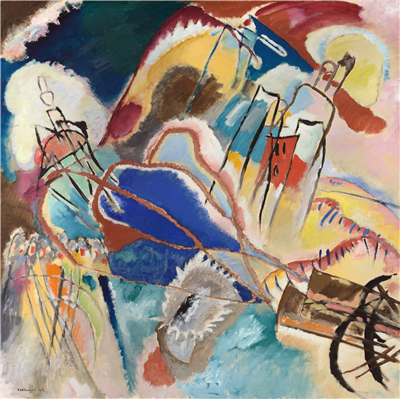 |
This is a whistlestop tour of major artworks, key themes, important ideas and stylistic changes in Modern and Contemporary art from the late 1800s to today to serve as an introduction to the myriad of styles in art in the 20th century.
Sarah Ciacci has an MA in History of Art (Late 19th century French Painting and 20th Century Art) from University College London. She has been a Blue Badge Guide for London since 2008, specialising in art, museums and galleries. Since 2008 she has trained Blue Badge Guides in the National Gallery and is an art lecturer for trainee guides in Tate Britain, Tate Modern and for a period in the National Portrait Gallery. From 2008-2023 she was Adjunct Faculty at Richmond University teaching the History of British Art, the History of Museums in London and the History of London. She is a gallery educator and runs regular courses and independent lectures on a variety of art historical periods. |
|
| Wednesday, 11 November 2026 |
| Time Machines: Clocks in art and literature from c.1300 to present day |
| Dr Christina Faraday |
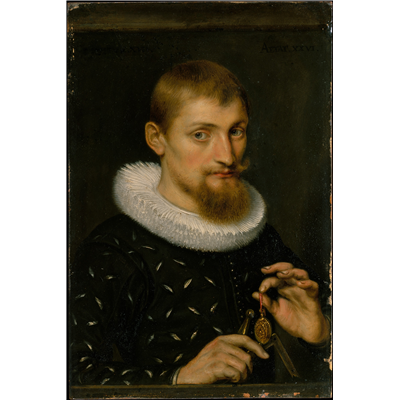 |
Few people nowadays give more than a second thought to their clocks: practical, sometimes beautiful, devices that form the background noise of our daily lives. This talk explores the visual and literary uses of the clock, the varied meanings it could hold throughout the ages: as an ominous symbol of oncoming death, but also as a metaphor for the soul, for capitalism, and for the good use of time. Consideration will be given to medieval manuscripts and frescoes, poetry, still life and genre paintings, and satires by Jonathan Swift and Hogarth. We will consider nineteenth-century ideas about power and the working day, in portraits of emperors and seamstresses and novels by Dickens.
Christina Faraday FSA FRHistS is an historian of art and ideas, specialising in Tudor and Stuart Britain and the wider 16th and 17th-century world. She is a Research Fellow in History of Art at Gonville and Caius College, Cambridge, a Trustee of the Walpole Society for British art history, and a BBC New Generation Thinker, appearing regularly on BBC Radio 3 and in other popular media. She is an experienced lecturer, and teaches for the History of Art Department at the University of Cambridge, The Wallace Collection, the National Gallery, London, and for the Institute for Continuing Education, Cambridge, where she is Co-Director of the MSt in History of Art and Visual Culture. Her first book, Tudor Liveliness: Vivid Art in Post-Reformation England, was published in 2023 by the Paul Mellon Centre and Yale University Press. Her second book, The Story of Tudor Art, was published in 2025.
Please note that we will pause for a two minute silence during this lecture. |
|
| Wednesday, 13 January 2027 |
| The Women who Conquered Comedy |
| Tyler Butterworth |
 |
This lecture celebrates the careers of some truly remarkable women who made their mark in what was once a male-dominated world, giving us some of the finest moments in British comedy. From Joyce Grenfell to Victoria Wood, from Thora Hird to Penelope Keith, and from Dora Bryan to Wendy Craig — along with many other unforgettable performers — we’ll revisit the women who helped shape the nation’s comic voice.
Drawing on his own personal connection to this world, and illustrated with letters, anecdotes and wonderful examples of their work, the lecturer explores what drove these much-loved figures to step into the spotlight. We’ll consider the unique qualities that made them so funny, and how they earned their hard-won place in the history of British theatre and comedy.
Tyler Butterworth grew up in a theatrical family and spent twenty five years as an actor working extensively in film, television, theatre and radio. He then worked as a development producer in television documentaries. Now, he produces walking audio guides to cities across Europe for private clients. He lives in Sussex where he walks on the South Downs and the South Coast. |
|
| Wednesday, 10 February 2027 |
| Nature sits for Mr Gainsborough |
| Amina Wright |
 |
Although Thomas Gainsborough (1727-1788) often complained about the tedium of painting one portrait after another, his delight in depicting animals radiates from his work. In landscapes, portraits and sketches, Gainsborough’s animals are beautifully and affectionately observed and overflowing with character and meaning. Gainsborough lived and worked at a time when animals were far more visible in town and country and when the idea of dogs and cats as pets - friends and companions rather than mere servants - was emerging. At the same time, scientists and landowners were fascinated by the possibilities of breeding, developing new, more efficient cattle and horses and a different dog for every need. As Ellis Waterhouse observed: “the number of dogs which diversify his human portraits is surprisingly large and many of them are more memorable than their masters.” In this lecture we will meet some of those memorable dogs, as well as cats, horses, and even donkeys, cows and pigs.
Amina Wright has three decades of experience as a curator of historic art collections and exhibitions. She has produced several major exhibitions on eighteenth-century British Art and Old Masters and published and lectured widely in these areas. As Senior Curator at the Holburne Museum in Bath she was a leading member of the team that delivered the museum’s highly successful 2011 redevelopment. She has recently completed a unique and brand new museum, the Auckland Project’s Faith Museum in County Durham. Amina has also worked for English Heritage and the National Trust and has an MA in Christianity & the Arts from King’s College London. |
|
| Wednesday, 10 March 2027 |
| Ludwig von Beethoven |
| Sandy Burnett |
 |
The 200th anniversary of Ludwig van Beethoven's death in March 1827 makes it a great time to reassess the legacy of this great composer. Born into a family of court musicians in Bonn, Beethoven became one of the greatest and most disruptive figures in the history of classical music; by the time he died in Vienna he had completely transformed music's cultural landscape. This lecture reflects on this brilliant, cantankerous, visionary and astonishingly original composer, and traces how he grew from Classical beginnings to become a true Romantic artist, or as he preferred to describe himself, a “poet in sound.
Sandy Burnett is one of the UK’s most versatile music commentators, enjoying a career that combines broadcasting, performing and lecturing. After studying at St Catharine’s College, Cambridge and working as music director for the RSC, National Theatre and in London’s West End, Sandy Burnett spent a decade as one of the core team of presenters on BBC Radio 3. Combining engaging scholarship with hands-on expertise, he devises and leads cultural holidays all over the world and was appointed the Academy of Ancient Music’s Hogwood Fellow for the 2018-19 season. He has directed a complete performing cycle of Bach’s sacred cantatas, conducts the Chiswick Chamber Orchestra and is a first-call double bass player on the London jazz scene. |
|
| Wednesday, 14 April 2027 |
| Persepolis: art, architecture and ideology of the Persian Empire |
| James Renshaw |
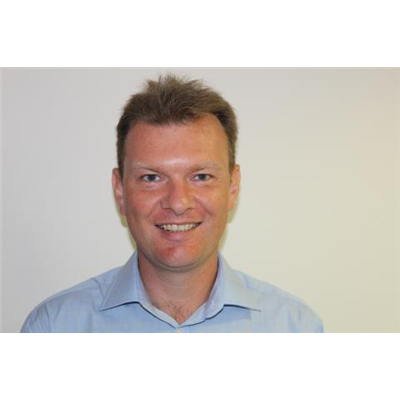 |
The Persian empire exploded into life during the middle of the 6th century BC and was the largest empire in the world for the next two centuries. It stretched from the Mediterranean in the west to the Indus valley in the east, from the Eurasian steppes in the north to Egypt and Arabia in the south. In around 515, its third Great King, Darius I, commissioned the building of a new city, Persepolis, with his palace at its centre. We know a great deal about this palace, and one of its central features, the Apadana Staircase, can be seen in replica in the British Museum. What can this palace and its art tell us about the ideology of this extraordinary and influential empire?
James Renshaw Following a degree in Classics from Oxford University, James taught Classics at secondary school level, most recently at the Godolphin and Latymer in London; where he ran the school’s Ancient World Breakfast Club, which has an ethos similar to that of The Arts Society. He has published a number of textbooks related to the classical world, including In Search of the Greeks and In Search of the Romans. In addition to his school teaching, he has lectured for the V&A Academy, most recently on its Art and the City: Antiquity to Renaissance course. He has been a Council Member for the Hellenic Society and the Roman Society. James is currently working on a book due out in 2027 on the history of the marathon race. The Marathon: an Epic History seeks to chart how stories from the battle of Marathon in 490 BC led to a new 'marathon' event at the first modern Olympics in 1896, and how this event has gone on to become a sporting craze. |
|
| Wednesday, 12 May 2027 |
| The Golden Age of Illustration |
| Dr Emma Watts |
 |
The Golden Age of Illustration spanned just 30 years, when improvements in literacy created demand, and advances in printing technology allowed publishers to produce lavish colour illustrations for the first time.
An enduring art form during the Victorian era, it reached its creative and commercial peak in the early 20th century. Many renowned artists got their start producing pictures for children's books and literary magazines during that Golden Age. This was the time when Illustrations brought fairy tales, myths, and classic literature to life, with imaginative, detailed, and often whimsical or eerie art, making books cherished objects.
Dr Emma Watts is an Art Historian whose career began in the fine art auction world and she has since had a successful academic career in the UK, Australia and Hong Kong. Emma is passionate about access to the fine arts and its education. She has developed curricula and been active in policy, planning, education and advisory boards for Heritage, Museums and the Arts. She is currently enjoying the diversity of consultancy, with Watson Strand, specialists fine art valuers, lecturing with the Arts Society and writing |
|
| Wednesday, 09 June 2027 |
| Cartier: King of jewellers, jeweller of Kings |
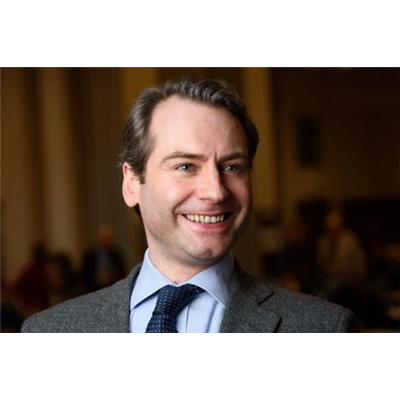
| Andrew Prince |
 |
The name Cartier immediately brings to mind images of exquisite jewels and peerless elegance. At the end of the 19th and start of the 20th centuries, the crowned heads of Europe (not to mention their influential mistresses) vied to outdo one another with opulent displays of status and splendour. Their gems were a defining feature in this glittering battle, and a proud Frenchman and his three talented sons saw an opportunity to use their artistry and expertise to completely transform jewellery design and industry as a whole.
Andrew Prince has had a passion for jewellery since he was a small child. In fact his enthusiasm can be traced back to the time when, at the age of three, he swallowed one of his mother’s pearl earrings having found her jewel box hidden from him in a cupboard. In 1980, when he was nine, Andrew's mother took him to the Princely Magnificence exhibition at the V&A, exhibiting Renaissance jewels dating from 1500 to 1630. It proved a revelation. Dazzled by the splendour and opulence of the jewels on show, Andrew decided then and there that creating jewellery was what he wanted to devote his life to. His passion for jewellery grew when, in 1984 on his first ever visit to Bond Street, Andrew viewed an exhibition by Castellani and Giulianoe at Wartski & Co’s. While there, he was allowed to handle beautiful 18th century gold boxes and magnificent imperial Russian pieces by Fabergé. Andrew started work in London’s Bond Street, working for The Antiques Roadshow expert Ian Harris. Under his guidance, Andrew developed an appreciation for jewels that were valued for their quality of design and craftsmanship, rather than for how much the stones in the piece were worth. He then joined the renowned contemporary jeweller Elizabeth Gage. She was to have an enormous influence on Andrew's sense of what was possible within the realm of jewellery design. Andrew soon began to receive private commissions for celebrities such as Michael Jackson (a large crystal and pearl shoulder jewel) and Shirley Bassey (necklaces) |
|
| Wednesday, 14 July 2027 |
| Canal History and Heritage |
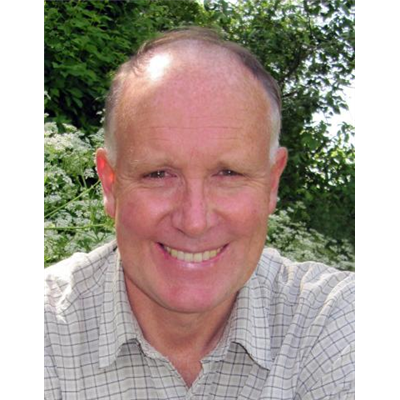
| Roger Butler |
 |
This lecture provides a colourful introduction to the secret world of our 2000-mile inland waterway network and looks at all aspects of their exceptional artistic, architectural and engineering vernacular. Features range from sweeping aqueducts to tiny bollards; from colourful historic narrowboats to 'Roses and Castles' artwork; from grand World Heritage Sites to quirky listed buildings. A well-known architectural historian once described our canals as a 'poor man's art gallery'. Roger’s lectures are always tailored to include local and regional examples which reflect the unique distinctiveness of our inland waterways.
Roger Butler is a landscape architect and an experienced writer, photographer and lecturer. He has a particular interest in the unique history, architecture and traditions of our canal network and worked on some of the UK’s major canal restoration projects. He has also acted as a consultant to bodies such as Waterways Ireland, Natural England and the Jurassic Coast World Heritage Site. He regularly contributes to waterway and heritage magazines and writes and provides images for a range of countryside and outdoor titles. Roger is a Fellow of the Royal Geographical Society, a Licentiate of the Royal Photographic Society and a Chartered Member of the Landscape Institute. |
|
| Wednesday, 08 September 2027 |
| Paul Klee |
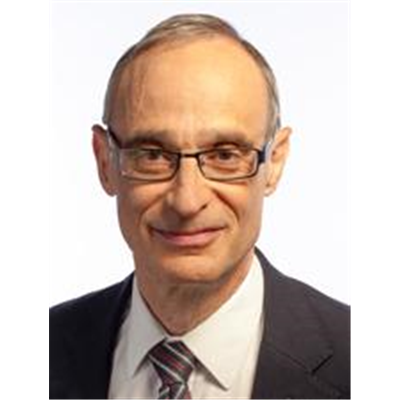
| Dr Alan Silman |
 |
This is a unique and very moving story for any artist! This lecture reviews the life and works of Paul Klee and the impact of his unfortunate mysterious illness. The talk will show Klee as a poet, a writer, an accomplished musician, a teacher as well as being one of the most prolific artists of the 20th century. His work covered several 'isms' of post first world war German art. He also had a wicked sense of humour in his caricatures. Shortly after escaping from Nazi Germany, as one of the so-called 'degenerate artists', Klee developed the very rare auto-immune disorder, scleroderma. This is a disease that has been the subject of much Alan’s research career.
Professor Silman has had a career studying the long term effects of disabling disorders. The series of lectures offered to the Society is based on his research on a number of famous people in the arts, of the impact of their medical problems on their achievements. He has focused recently on engaging with lay audiences across a range of platforms aiming to inform, educate and at the same time to engage enotionally with the challenges and sorrows of many of his target subjects. Currently Alan Silman is a Professor of Medicine at Oxford University and Senior Research Fellow at Green Templeton College Oxford. Prior to this for 8 years he was Medical Director of the charity Arthritis Research UK (ARUK - now called Versus Arthritis). He is an epidemiologist with a particular interest in diseases of bones, muscles and joints. He has authored over 700 research publications and a number of textbooks. He is amongst the top 100 published scientists across all disciplines in UK universities. |
|
| Wednesday, 13 October 2027 |
| The Art of Spain |
| Ed Williams |
 |
Spain is perhaps most often associated with holidays, a land of sunshine, rioja and a relaxed pace of life, but Spain’s sometimes forgotten tumultuous history gave rise to some of the most astonishing artworks in European history.
These works, often overlooked in favour of those created by Italian and Northern European painters were often ignored, or even dismissed.
Spanish artists produced some of the most powerful and arresting art works created anywhere in the Western Europe, and these have shaped and influenced the wider art world. This lecture, study day, or series of lectures will be structured around 5 key Spanish painters and their contemporaries, across half a millennia, and we will consider how they responded to the seismic shifts in wider Spanish society over the course of their careers, and how their works have framed our understanding of their homeland.
Ed Williams is an Oxford educated Art Historian. He is passionate about sharing his love of the History of Art to a range of audiences. He works at TATE Liverpool, delivering tours and talks of the collection and special exhibitions. He is also an official Green Badge Tour Guide for North Wales. In addition to leading tours, Ed teaches the History of Art at the University of Liverpool, where he specialises in teaching adult learners at the Department of Continuing Education. He is a member of the International Association of Art Critics and his work has been published in several journals and online publications |
|
| Wednesday, 10 November 2027 |
| Mistress of Menace and Master of Suspense |
| John Francis |
 |
Daphne Du Maurier and Alfred Hitchcock had much in common. Du Maurier is sometimes described as a romantic novelist but this is completely misleading. Like Hitchcock, she dealt with themes of loneliness, gender, fear, suspense and gothic imagery. In their work they built compelling and complex emotional landscapes for their characters. Although they never met, the pair produced three key cultural landmarks of the 20th century in Jamaica Inn, Rebecca and The Birds. In this lecture we will explore Hitchcock’s, The Birds (1963). We will closely unpack some of the essential scenes in the film and look at the masterful techniques both on the page and on the screen Exmouth.
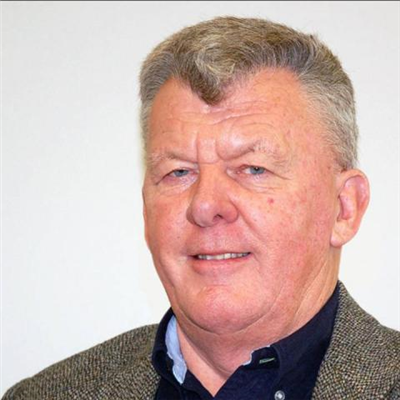
John Francis is an inspirational speaker who has delivered lecturers and workshops in the USA, Beijing, Malaysia and the UK. Initially trained as a painter, John was awarded the Max Beckmann Memorial Scholarship in painting in Brooklyn, New York and went on to be artist in residence for the state of Texas. Later in his career John produced and directed several short films and animations. He has taught film, art and pedagogy at the University of Exeter, Arts University Bournemouth, University Sains Malaysia, Southwestern College, California, Brunel University, and Kingston University London. |
|